
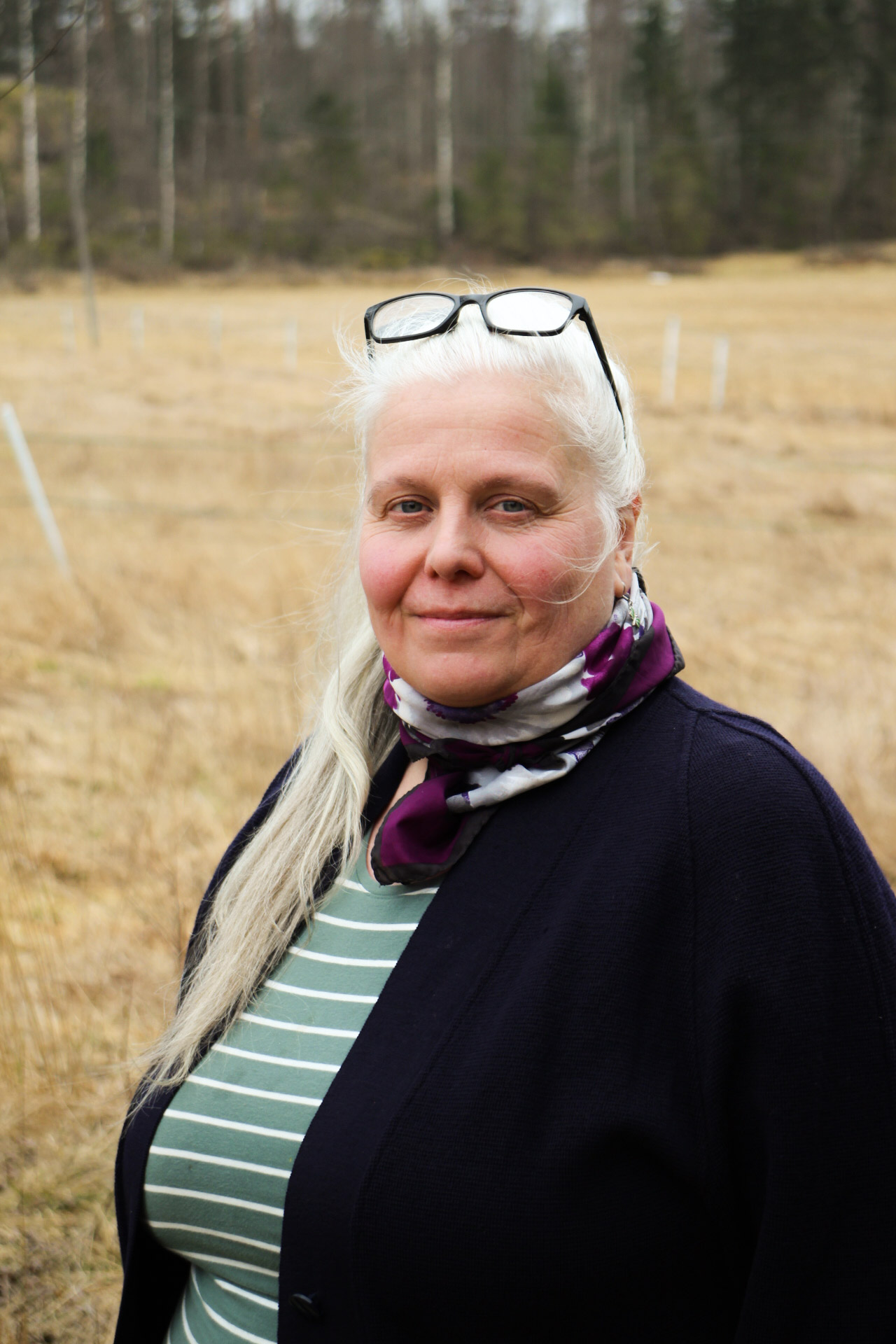

Dr. Jeanette Lindblom began as a new researcher at FIME in early May. She is a historian and archaeologist whose research focuses on the eastern Mediterranean from Late Antiquity to the early Middle Ages. During this period, the Eastern Roman Empire, often referred to as Byzantine Empire, ruled large parts of the region and its peoples until tribes from the Arabian Peninsula began conquering the Middle East and North Africa.
Lindblom completed her doctorate at the University of Helsinki with a dissertation on the social status of women in the early Byzantine Empire. In her dissertation, she examines how the norms imposed on women by society could be reconciled with women’s activities in public spaces. In addition to Constantinople, her research covered, among others, Alexandria, Beirut, and Antioch.
Lindblom has also participated as an archaeologist in the excavations at Jabal Harûn led by Prof. Jaakko Frösén (Finnish Jabal Harûn Project). “I spent four excavation seasons in the vicinity of Petra in Jordan. The glass artefacts discovered during the excavations became the focus of my own research, especially glass oil lamps that were used at different times in the church of the pilgrimage site,” Lindblom explains. Prior to this, she participated in the excavation project led by Docent Zbigniew T. Fiema (Petra Roman Street Project), which studied shops along Petra’s Roman main street. “These experiences have also given me a good understanding of the material culture of the period and the region,” she says.
As a researcher at FIME, Lindblom continues her work on Byzantine history. She is currently studying the networks of the religious, administrative, and political elite during the fifth and sixth centuries. Once again, the old centres of the Middle East play an important role, and the research will hopefully provide new information about social structures.
“I am excited to once again conduct research in the Middle East and get to know places that so far I have only encountered through written sources. I also hope to highlight the periods of Late Antiquity and the Middle Ages, which sometimes remain somewhat overlooked between Antiquity and the modern era,” Lindblom says.